Posts

Showing posts with the label history

Armor: Chemistry and Physics

Image
One of the big mistakes in assessing tanks is judging the defensive capability based on inches (or milometers) of armor.  Armor is not armor and I'm going to go through some of the chemistry and physics of different types of armor in an attempt to enlighten people on what difference different types of armor mean.

Aux Armes, Citoyens! (Updated with my latest Paris photos!)

Image
To hear the Allies tell the story, Paris fell to marching British, American and, oh yeah, some Free French troops. But the true story is much, much different.

Krasny Krym Favorite Donut of Soviet Sailors

Image
Few warships in WWII had the colorful story of the Red Crimea (Krasny Krym.)  Laid down during WWI, towed to the safety of Petrograd during the Revolution, laid up for five years before completion and finally a harrowing journey around Europe to the Black Sea, the Krasny Krym was a quintessential Red Navy warship. The Krasny Krym was classified as a light cruiser and bristled with 5 in (130mm) guns.  The Krym carried 15 in all and while such a weapon was considered primarily an anti-aircraft gun in more modern navies, for the Soviets it was a surface action gun as well as shore bombardment weapon.  In an attempt to keep the ship up to date a variety of anti-aircraft guns were installed--and worked because the Krym survived the war.  In fact, the Krasny Krym was the only Soviet Light Cruiser to shoot down a German aircraft during the war. This is an important time to make a point about strategic surprise and Barbarossa.  It didn't work with regard to the B...

The Mighty Colorado

Image
I live in France now, but I will always have a place in my heart for the Centennial State.  All that remains of BB-45 is the wheel and the bell, which reside in the Student Memorial Center at the University of Colorado in Boulder (also home to Admiral Arleigh Burke.) Tangentially to ASL, I want to lay out some of the battles where the Colorado fought, applying the help of its 16 inch earth movers for the benefit of the USMC.  I'll link to the ASL Scenario Archive if you are interested in playing scenarios in the aftermath or with the help of the Colorado's powerful guns. The first of her class, the Colorado was laid down in New York in 1919.  She saw a lot of the world before settling down at Pearl Harbor in 1941.  As luck would have it, she was due for a refit and was sent to Puget Sound in June and missed the action in December of that year.  The refit completed in May of 1942, she spent her first year of action uneventfully patrolling in San Francis...

I've been working on the railroad...

Image
It's an open question as to whether railroads have and should have a greater role in Advanced Squad Leader. Probably the most frequently discussed question is armored trains, but this is far less important than the background information which comes into play—most of which is unimportant and perhaps uninteresting in an ASL context. I'll cover three areas of ASL railroading: 1) background knowledge about the role railroads played in WWII; 2) Railroad issues of interest to scenario designers and 3) a quick foray into railroad rules and some ASL related railroad stuff. Amateurs discuss tactics, professionals discuss logistics. While railroads are a rare occurrence in ASL, they were incredibly important considerations for the soldiers and leaders of armies during WWII. Railroads provided logistics that couldn't be matched by any other means. Armies require huge amounts of stuff: food, replacement parts, ammunition, medical supplies. While it is, to a degree, po...

Counter Values

Image
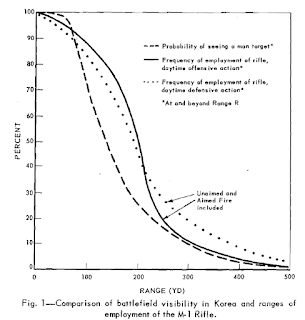
By The Numbers How were the three arguably most important numbers in ASL generated and why is there virtually no conversation about whether they are real? You can tell an ASL grognard 1 when you mention 666 and he immediately thinks of a first line US squad rather than the mark of the devil. Virtually all ASL players will know exactly what you are talking about if you give the three digits of its firepower, range and morale. Maybe less so of, for example, second line Italian squads. And, to be sure, there is a lot of overlap, for example, 447 squads. However, it is this defining characteristic that identifies units. How did these characteristics come about? Why are they so universally accepted and virtually never debated? Perhaps most importantly: Why do we go on adding squads (especially by third party producers) without laying down a basic understanding of what goes on in the composition of these factors? I propose a short exercise to help us understand...